
A Guide to Fruit Variety: Berries, Citrus, Melons
Buying the same three fruits every week is not a failure. Widening the range is easy once you know what each group is good for and how to serve it without extra work.
Four slots that cover a week
- 1 One berry fridge
- 2 One citrus cool, dry
- 3 One easy handheld fruit bowl
- 4 One seasonal item rotates
What this guide covers
Seven everyday groups carry most fruit variety in a French kitchen: berries, citrus, apples and pears, melons, avocado, pomegranate, and the convenience set of bananas, grapes and stone fruit. Each one below lists what it is typically good for, a practical portion, and the way it actually gets eaten on a normal weekday. Nothing here is a rule you have to keep — it is a set of options so the shopping list stops repeating itself.
Berries: highest effort-to-reward ratio
Berries are the easiest upgrade to a routine. Strawberries, blueberries, raspberries and blackcurrants go on yogurt, oats or toast with no chopping at all. Frozen berries work in the same places and cost less out of season, and a handful is a portion — you do not need to weigh anything.
They are also among the fruits most often highlighted in consumer coverage of antioxidant-rich eating patterns. That coverage is a reason to include them, not a reason to eat them daily. Two or three times a week is already a real change to a routine, and it is the version most people keep.

one handful, rinsed just before eating
Fridge, dry, sealed
Before the next group: a portion in the hand
Most fruit advice fails on one detail: nobody measures it. The short version is that a portion is roughly what fits in one closed hand, or one medium piece, or a thick slice of melon. Two to three portions a day across different fruit groups is a workable target for an adult man eating otherwise normally. You do not need to count grams.
Keep that measure in mind as you read the groups below. It makes the difference between a description you agree with and a fruit you actually put in the bowl.
Citrus: winter convenience
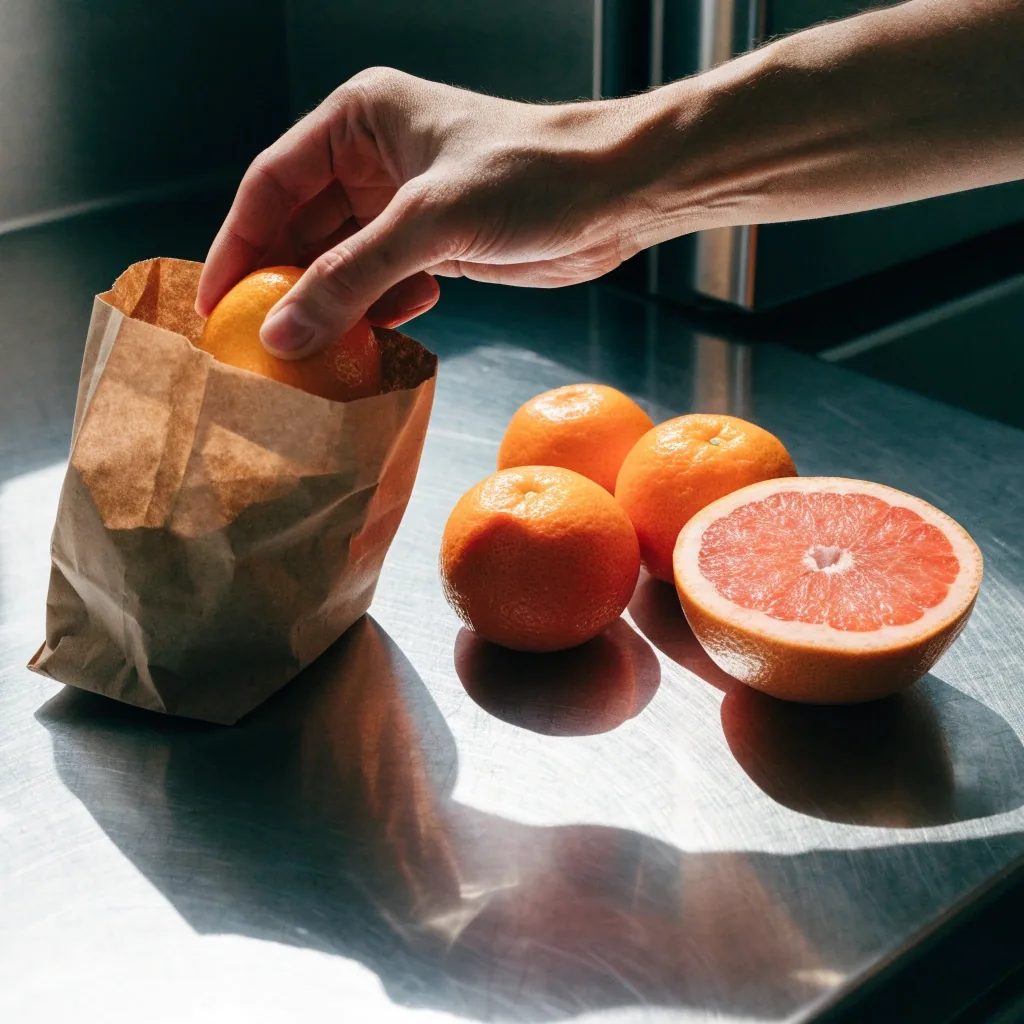
Oranges, clementines, lemons and grapefruit cover the colder months well. Clementines need no knife and travel in a bag, which is why they survive a commute better than almost any other fruit. Grapefruit is a breakfast fruit for people who want something sharper than an orange, and it shows up regularly in citrus nutrition discussions.
One point is worth slowing down for. Grapefruit interacts with some prescription medicines, so if you take anything regularly, ask a pharmacist before making it a daily habit. That is a question for the counter at your local pharmacy, not a reason to avoid the whole group — oranges and clementines carry the same slot in the rotation without that caveat.
no knife needed
Clementines, eaten between meetings
ask first
Grapefruit, if you take regular medicines
Apples and pears: the workhorse fruits
Apples and pears keep for days, need only a rinse, and are easy to eat anywhere. They appear in most fruit-focused research surveys and are consistently part of high-variety eating patterns. They are not exciting, and that is part of their value: they are the fruits you will still be eating in three weeks, when the berries are gone and the melon is past its best.
Melons and watermelon: warm-weather volume
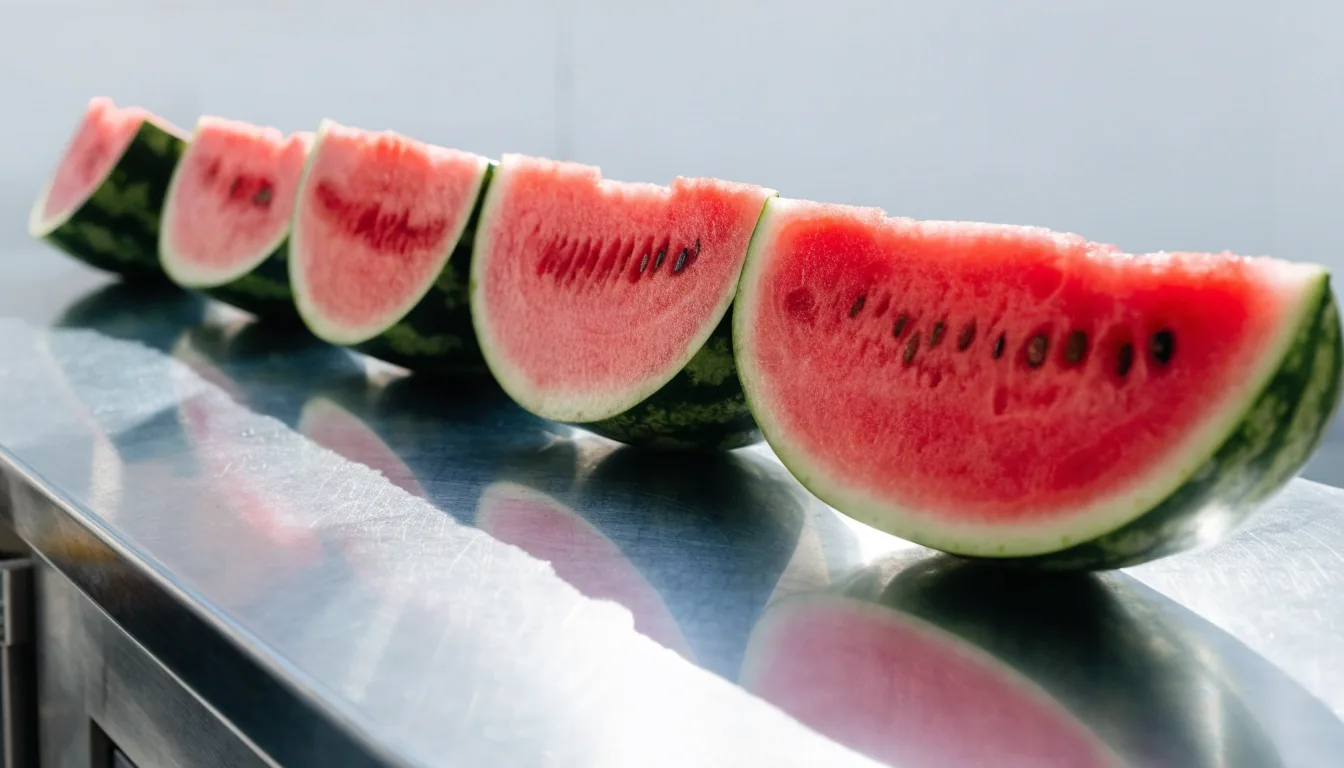
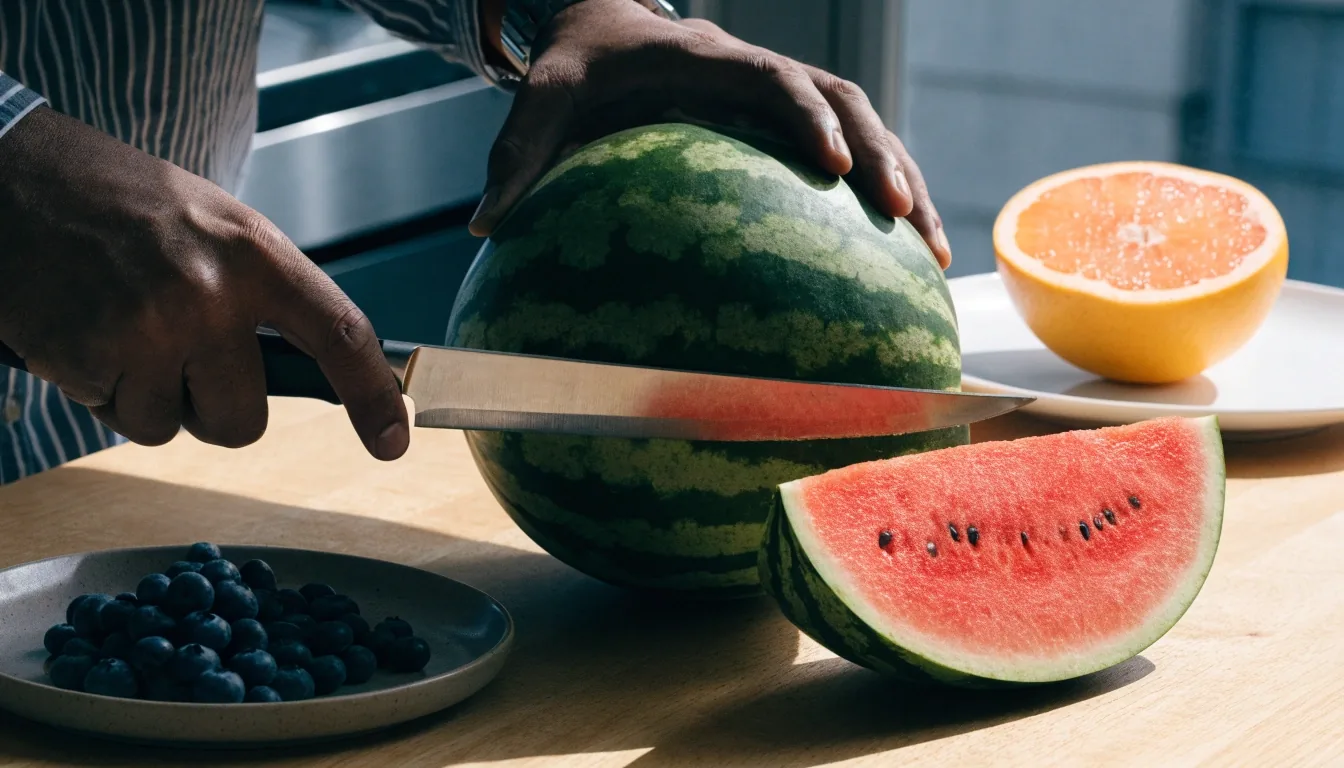
Watermelon and melon are light, hydrating and simple to portion in slices. They are the classic summer fruit for a straightforward reason: they need no preparation beyond cutting, and a thick slice is close to a full portion. They are also easy to serve at a meal rather than as a snack, which helps if snacks are the thing you forget.
Buy them whole and cut them yourself for the week, or buy pre-cut if that is honestly what gets eaten. A whole melon left in the fridge and a pre-cut box that disappears in two days are not the same purchase, and the second one is not a failure.
portion readout
A thick slice — roughly two fingers wide — counts as one portion. Half a small melon is two.
Cut on the day you shop and it keeps two or three days covered in the fridge.
Avocado: fruit as a savory food
Avocado is a fruit with a distinct fa profile, and it is used in savory eating rather than dessert-style intake. That makes it unusually useful for men who do not want sweet snacks. Half an avocado on toast or in a salad counts as a portion and pairs well with protein, which is where it earns its place in a rotation.
It is not a low-calorie food, so portion it rather than treating it as free. Half at a time is the usual practical measure: the other half keeps with the stone left in and a squeeze of lemon over the cut face.
Pomegranates: interest and texture
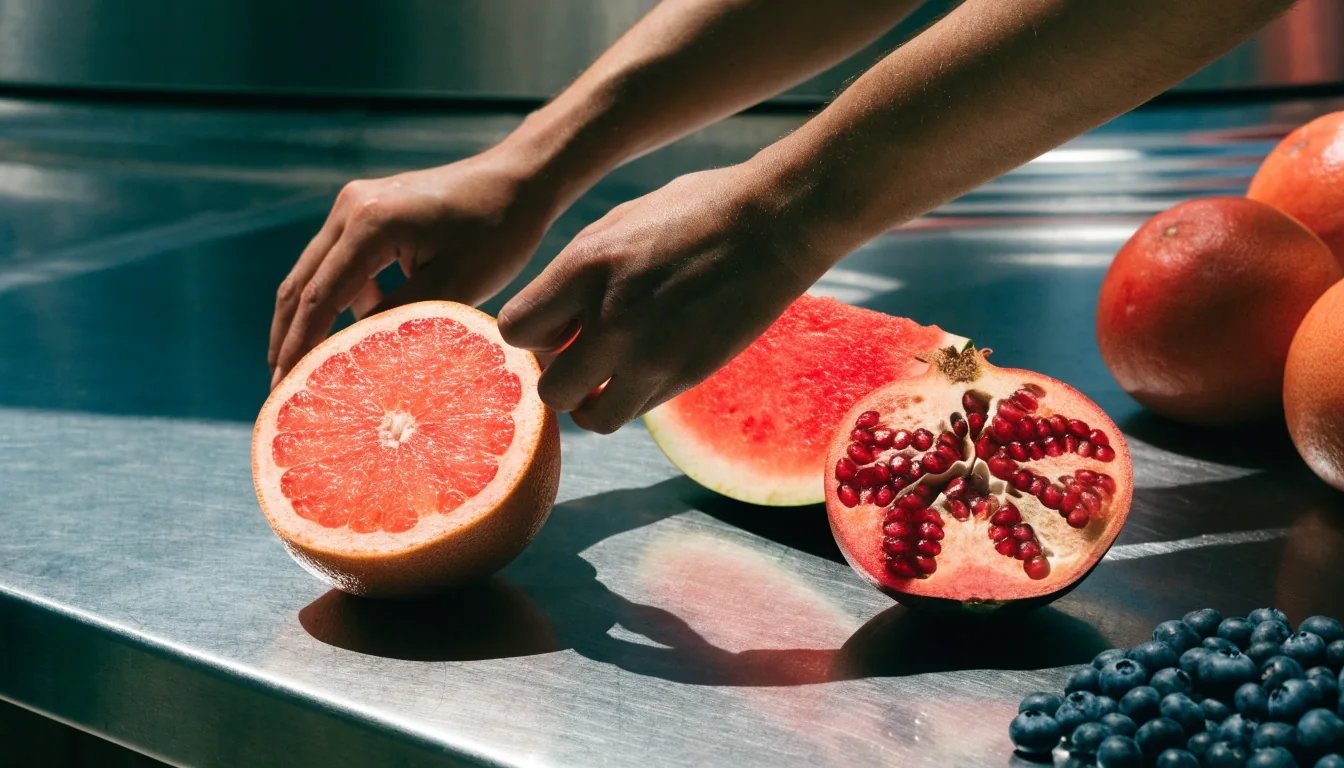
Pomegranate is a seeded fruit often discussed for its color and polyphenol content, and it tends to appear in variety-focused coverage rather than basic everyday lists. It has a strong culinary identity and works over salads, yogurt or grain dishes — anywhere you would otherwise add dried fruit and want something sharper.
Removing the seeds takes a couple of minutes and is worth doing once for the week: cut the fruit in quarters, work them apart over a bowl of water, and the pith floats while the seeds sink. It is a fruit for texture and interest, not a shortcut to anything. Treat it that way and it earns its place.
Bananas, grapes and stone fruit
no washing, no cutting
Bananas
The most convenient fruit available: one portion, easy before or after activity, and cheap most of the year. Keep them separate from other fruit, since they speed up ripening in everything nearby.
easy to over-eat
Grapes
Portion them into a small bowl or a lidded cup rather than eating from the bag. The fruit is fine; the container is what changes how many of them disappear in an evening.
buy in season
Stone fruit
Peaches, plums, apricots and nectarines fill the summer months and need nothing but a rinse. In season they are cheaper and better than at any other time of year, which makes them the natural monthly swap.
Combining fruit with protein and fats
Fruit holds you longer when it comes with protein or fa. Each pairing below turns a quick sugar hit into something that lasts, and none of them takes more than a minute to assemble.
This matters most at breakfast and in the late afternoon, when fruit alone rarely carries anyone to the next meal. It also makes fruit easier to serve at a meal rather than as a separate snack you have to remember.
A simple rotation that works
Keep four categories in the house: one berry, one citrus, one easy handheld fruit, and one seasonal item. That gives you variety across a week without a shopping list you will abandon by Wednesday. Swap within categories as prices and seasons change — the shape of the list stays the same.
Rotate the seasonal slot monthly and the rest can stay fixed for years. In October that slot is likely apples, pears or the last of the late plums; in July it is stone fruit and melon. It is not complicated, and that is why it survives a busy week.
slot one
A berry, fresh or frozen
slot two
A citrus, usually clementines
slot three
Apples, pears or bananas
slot four
Whatever is in season this month
Buying, storing and waste
Fruit gets thrown away because it is stored wrong, not because people do not intend to eat it. The four rules below cover most of what goes wrong in a normal kitchen.
If you throw fruit away most weeks, buy less and buy frozen for the categories that spoil fastest. Frozen berries and mango out of season are the cheapest way to keep the rotation honest without a fridge full of regret.
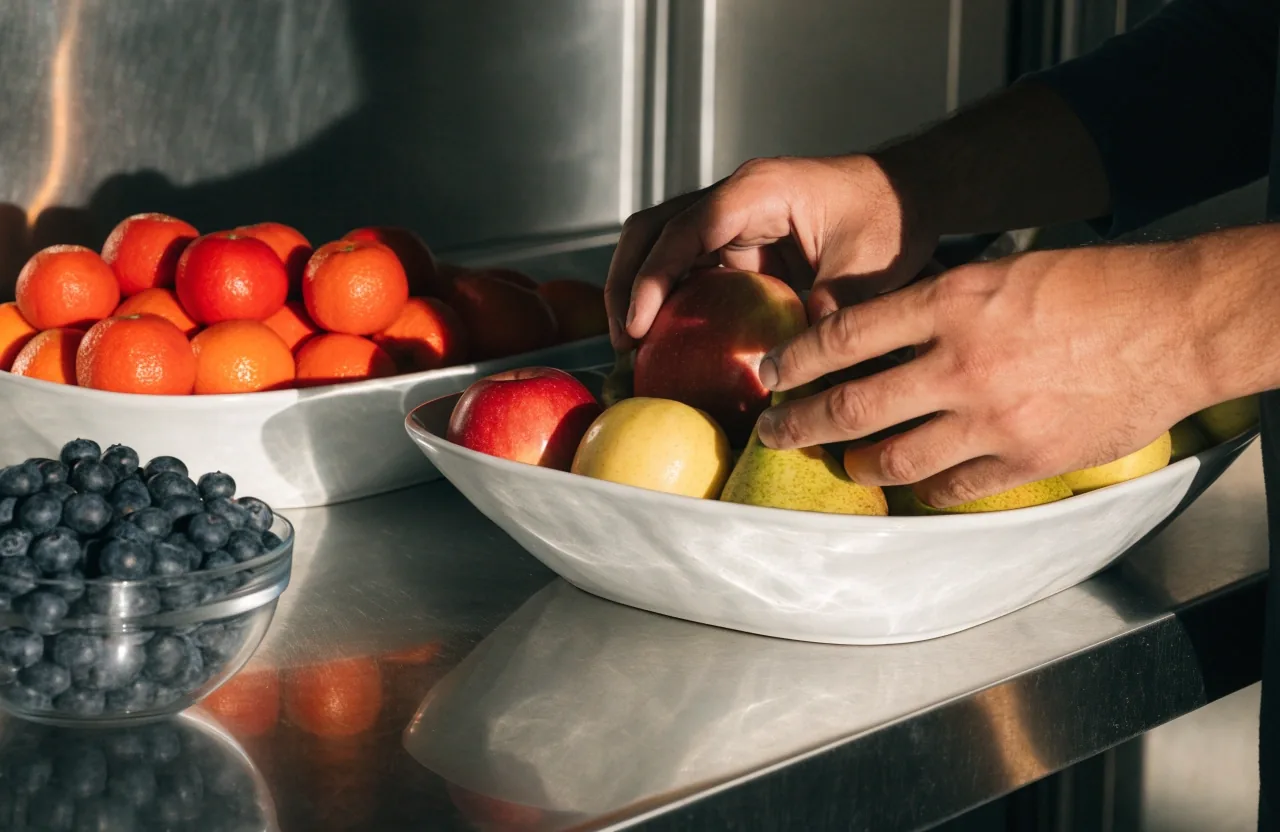
store dry, rinse at the last minute
Cool place beats the fridge drawer
what we do not claim
Fruit is food, not a correction
Nothing on this page is a claim about what fruit will do for you. Fruit variety helps you eat a wider spread of nutrients across a week, and that is where the benefit sits: in patterns, over months, alongside the rest of what you eat. It does not replace anything, and no single fruit carries a rotation on its own.
If you take regular medicines, the grapefruit point in the citrus section is the one to raise with a pharmacist before you change a habit. For everything else here, this is general eating guidance, not personal advice.
where the guidance comes from
- Fruit and vegetable intake guidance for adults
- Published nutrition writing on fruit groups and portions
- Standard pharmacist guidance on grapefruit and medicines
Questions about fruit and everyday nutrition
Which fruit group should I buy most of?
Keep one berry, one citrus, one easy handheld fruit in the house, plus one seasonal item. That covers variety without overbuying, and the seasonal slot can change monthly as prices and quality move.
Is frozen fruit as good as fresh?
For everyday eating, yes. Frozen fruit is usually frozen soon after picking and works in the same places as fresh berries or mango. It is often cheaper out of season, which makes it the practical choice for the berry slot between November and May.
Does grapefruit interact with medicines?
Grapefruit can interact with some prescription medicines. If you take anything regularly, ask a pharmacist before making grapefruit a daily habit. Citrus as a whole is not affected — oranges and clementines fill the same slot in the rotation.
Is avocado a fruit?
Yes. It is a fruit with a distinctive fa profile, and it is usually eaten in savory dishes rather than as a sweet snack. Half an avocado is a practical portion, and it pairs well with protein at breakfast or lunch.
One place to ask about a fruit we missed
If a fruit you eat often is not on this page, write and tell us which one. The variety guide gets updated as we cover more of what people actually keep in the bowl, and reader questions are the shortest route to a fruit we skipped.
FruitWise Men's Nutrition · 24 Rue des Fruits, 69002 Lyon, France · Monday to Friday, 9:00 AM – 6:00 PM